The Standing Commission of the Almaty Regional Maslikhat Held a Meeting to Discuss Key Regional Issues
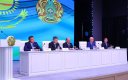
A meeting of the Standing Commission of the Almaty Regional Maslikhat was held, where a wide range of issues were considered — from providing housing for socially vulnerable citizens to the condition of engineering infrastructure and the preparation of roads for the spring flood period.
One of the key topics was housing policy. According to the Department of Construction, last year 1,500 rental apartments were purchased from private developers for citizens on the waiting list from socially vulnerable categories. This year, 5.3 billion tenge has been allocated for these purposes, which will allow the purchase of another 246 apartments in various districts of the region. At the same time, additional funding is being considered, which could make it possible to purchase up to 2,000 apartments in major settlements and the city of Konaev.
The region continues to face the issue of high housing costs. According to representatives of the department, this factor regularly becomes the subject of comments from inspection bodies. Deputies were invited to consider establishing maximum price limits for purchased housing.
Special attention was also paid to urban planning policy. During the meeting, a project was presented to establish an Architectural and Urban Planning Council under the regional administration. The need for its creation is associated with the adoption of the new Construction Code, which will come into force in July this year. The new advisory body is expected to develop a unified approach to urban development, improve the quality of the architectural environment, and ensure greater transparency in decision-making.
The meeting also addressed preparations of road infrastructure for spring floods. The region has more than 4,000 kilometers of roads, hundreds of bridges, and thousands of water drainage structures. By now, a significant part of them has already been cleared to ensure the unobstructed flow of water. However, work has been temporarily suspended due to the completion of contracts with contractor organizations. A new tender has been announced, after which road maintenance and flood prevention measures will resume in full.
According to Nurlan Omirkhanov, Head of the Department of Energy and Water Supply, 25 electricity supply projects worth a total of 6.7 billion tenge were completed in the Almaty Region last year. As a result, more than 398 kilometers of power networks were reconstructed and restored. The work was carried out in several districts, including Ili, Zhambyl, Talgar, Karasai, and Enbekshikazakh districts, as well as in the cities of Konaev and Alatau. In addition, with the support of Alatau Zharyk Company JSC, 1,185 kilometers of networks and 871 transformer substations were repaired as part of preparations for the heating season. These measures reduced the wear level of electrical networks from 72% to 66%.
According to the head of the department, the heating season proceeded normally; however, the wear level of heating networks remains high at around 40%. Modernization of boiler houses and repairs of heating mains continue in the region, gradually reducing the level of deterioration. Water supply infrastructure is more than 50% worn out, although almost all cities and most rural settlements already have access to centralized water supply. Large-scale reconstruction of networks is planned in the coming years to improve system reliability and reduce accident rates.
Work on gasification of the region is also continuing. Currently, more than 80% of residents have access to natural gas. Authorities plan to increase coverage to 69% of settlements in the coming years and fully complete gasification by 2030. The key project in this area will be the construction of the Shelek–Kegen–Narynkol main gas pipeline.
The situation in the electricity supply sector remains a pressing issue. The deterioration of power networks exceeds 60%, despite ongoing modernization efforts. More than 900 accidents were recorded last year, although this figure decreased compared to the previous period. Authorities plan further construction of substations and reconstruction of networks to improve the stability of the energy system.
Overall, the commission meeting demonstrated that the region is actively implementing infrastructure projects; however, major challenges remain, including high network deterioration, rising housing costs, and the need for systematic modernization of public utilities. The initiatives discussed are aimed at gradually addressing these issues and improving the quality of life for residents.