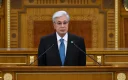
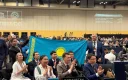
President of Kazakhstan, Kassym-Jomart Tokayev, announced a major nationwide infrastructure programme and set out priorities for investment, energy security, technological development and economic reform in his State of the Nation Address, “Kazakhstan’s Current Priorities in a New Historical Cycle”, delivered on 28 October.
At the centre of the address was “People’s Construction”, described by the President as the largest infrastructure project in Kazakhstan’s history. An Infrastructure Modernisation Plan will be supported by approximately 6.5 trillion tenge ($14.27 billion) from the National Fund by the end of 2029, of which 1.5 trillion tenge ($3.29 billion) is to be earmarked for social projects during 2026 and the first two months of 2027. Tokayev also proposed declaring 2027 the Year of Nationwide Large-Scale Construction.
The programme will initially include around 70 healthcare facilities and 50 educational, sports and cultural facilities, alongside transport, housing, utilities and improved access to drinking water and gas. It is expected to create employment opportunities for hundreds of thousands of people. “We must now direct this considerable potential towards modernising our infrastructure and improving the quality of life across every region of our country,” Tokayev said.
The President linked these plans to Kazakhstan’s economic performance. Citing International Monetary Fund projections, he said GDP was expected to approach $400 billion in 2026, with GDP per capita exceeding $19,000. Manufacturing now accounts for more than 14% of GDP, while the combined value of international reserves and National Fund assets exceeds $130 billion.
Energy security emerged as another priority. Tokayev set a goal of achieving a sustained electricity surplus by 2029 through new generation capacity, upgraded grids, cleaner coal generation and renewables. He said construction of the Balkhash nuclear power plant could begin as early as 2027 and called for a cooperation agreement to advance the Moyynkum nuclear project. He also proposed considering a strategic uranium reserve to secure long-term fuel supplies.
On transport, he said the Bakhty–Ayagoz railway is due to open in 2027, adding 20 million tonnes of freight capacity between Kazakhstan and China. The Aral–Caspian corridor, under construction since August, is intended to shorten the Trans-Caspian route by approximately 1,000 kilometres and cut delivery times by up to three days. He also called for improved border crossings, road quality, freight digitalisation and aviation infrastructure, including a new airport in Astana. “Kazakhstan must seize this historic opportunity to establish itself as a leading logistics hub in Eurasia,” Tokayev stressed.
To strengthen industrial diversification, Tokayev called for modern geological exploration, transparent mineral data and a national system for managing critical mineral reserves, including long-term financing and offtake agreements. He urged partnerships with developed countries to integrate Kazakhstan into global value chains and stressed that infrastructure investment should support domestic manufacturing.
He also called for a better-coordinated investment attraction system and stronger legal safeguards for businesses. In Alatau City, a new Investment Court based on the English common law model is planned for commercial disputes, alongside a Civil Court for other matters under the special legal regime. Legislative amendments are due to be submitted by the end of January 2027.
Digitalisation featured prominently in the address. Two supercomputers are already operational, with a third due before the end of 2026, while the fibre-optic link across the Caspian seabed has been completed. Tokayev called for practical use of artificial intelligence, digital employment rules by the end of 2026, regional pilots to help rural producers sell online, and wider use of asset tokenisation. “Our goal is to build a truly people’s digital economy,” he said.
On economic policy, Tokayev prioritised reducing inflation, expanding long-term lending and strengthening capital markets. He called for targeted changes to the new Tax Code, discussion of a higher tax rate for substantial wealth and a new Civil Code by the end of 2027. He also proposed considering a three-year moratorium on inspections of micro and small businesses from January 2027.
Social measures included raising the monthly minimum wage from 85,000 to 110,000 tenge from 1 January 2027, expected to benefit 1.8 million people, and increasing pay for primary healthcare specialists by up to 40%. Tokayev also outlined plans for new perinatal centres and children’s hospitals, more inclusive education and better-targeted welfare. He urged stronger agricultural investment, more efficient water use and completion of a national water information system.
Framing the address around Kazakhstan’s 35th anniversary of independence and its new Constitution, in force since July, Tokayev called for comprehensive public administration reform, with proposals due by 1 June 2027. He stressed national unity, the rule of law and accountable government as essential to building a “Just, Strong, Clean, and Progressive Kazakhstan”. “The ultimate measure of a state’s progress and the principal beneficiaries of all reforms are our citizens,” he said.
Key points from President Tokayev’s Address
Infrastructure and economic development
- Flagship construction programme. Tokayev announced Halyqtyq Qurylys (‘People’s Construction’), which he described as the largest infrastructure project in Kazakhstan’s history. He proposed designating 2027 the Year of Nationwide Large-Scale Construction, with projects spanning social facilities, transport, utilities and housing across all regions.
- National Fund financing. Approximately 5 trillion tenge ($14.27 billion) is to be allocated from the National Fund by the end of 2029 for an Infrastructure Modernisation Plan. Of this amount, 1.5 trillion tenge ($3.29 billion) is to be earmarked during 2026 and the first two months of 2027 to launch social projects. Spending will be subject to strict oversight and must deliver tangible economic and social returns.
- Immediate priorities. The initial programme includes approximately 70 healthcare facilities and around 50 educational, sports and cultural facilities, alongside improved access to gas and clean drinking water. The Government is to prepare a region-by-region list of projects by the end of 2026; qualified local small and medium-sized enterprises should participate.
- Economic outlook. Citing IMF projections, Tokayev said GDP is expected to approach US$400 billion in 2026, with GDP per capita exceeding US$19,000. Manufacturing now accounts for more than 14% of GDP, while combined gold and foreign exchange reserves and National Fund assets exceed US$130 billion.
- Private investment and financing. The President emphasised that public funds should help attract private capital rather than replace it. He instructed the Government to mobilise all available sources of long-term financing for infrastructure modernisation and industrial development.
- Employment opportunities. The People’s Construction programme is expected to create employment opportunities for hundreds of thousands of people, while supporting domestic businesses and stimulating regional economic development.
Investment climate and business conditions
- Investment coordination. The President called for a more coherent, centrally managed system for attracting and supporting investors, suggesting that the Baiterek Holding could take a more proactive role alongside the relevant responsibilities of the economic and foreign ministries.
- Alatau City legal framework. Alatau is to establish an Investment Court, based on the English common law model, to hear commercial cases, with a Civil Court handling other matters under its special legal regime. The Government must submit the necessary amendments to the Kurultai by the end of January 2027.
- Support for businesses. SMEs now generate 40% of GDP and account for almost 70% of fixed-capital investment. The Government is to develop a plan for medium-sized firms covering long-term finance, technological modernisation and closer links with major enterprises; reserving some public procurement for SMEs was also raised.
- Regulatory relief. Tokayev proposed discussing a new three-year moratorium on inspections of micro and small businesses from 1 January 2027, drawing lessons from the 2020–2023 moratorium. He also called for further decriminalisation of economic offences, fairer competition and action against unlawful obstacles to business.
Energy security and nuclear power
- Electricity surplus by 2029. Noting that Kazakhstan generates around 123 billion kWh annually but still faces shortages, Tokayev set the goal of achieving a sustained electricity surplus by 2029. Priorities include new generation capacity, upgraded power plants and transmission lines, cleaner coal generation and renewables, particularly solar power.
- Long-term energy planning. The Government is to update the integrated national energy balance through 2035, taking account of growing industrial demand, digitalisation, artificial intelligence and data centres.
- New nuclear projects. The President said construction of the Balkhash nuclear power plant could begin as early as 2027 and called for a comprehensive cooperation agreement to launch the Moyynkum nuclear power plant. Foreign partners should support technology transfer, high-tech industries and training of Kazakh specialists.
- Uranium security. He proposed considering a state strategic uranium reserve capable of securing fuel supplies for Kazakhstan’s nuclear power plants over the next century.
Transport and Eurasian connectivity
- New trade corridors. The Bakhty–Ayagoz railway is expected to enter service in 2027, increasing freight capacity between Kazakhstan and China by 20 million tonnes. Construction of the Aral–Caspian corridor began in August 2026; it is intended to shorten the Trans-Caspian route by approximately 1,000 kilometres and delivery times by up to three days.
- Logistics hub ambitions. Tokayev called for stronger domestic freight operators, consolidation and distribution centres, and manufacturing and trading hubs at transport junctions, positioning Kazakhstan as an organiser of international freight flows rather than solely a transit territory.
- Roads and border crossings. The President instructed the Government, through the Ministry of Transport, to take responsibility for the quality of both national and local roads. Reconstruction of all road border crossings is to be completed in 2027.
- Aviation and digitalisation. Construction of a new airport in Astana is due to begin in 2027. Restoration of Arkalyk Airport is complete, while airports at Zaysan, Katon-Karagay and Kenderli are expected to enter service soon. Transport routes and freight documentation must be fully digitalised.
- Air cargo development. Tokayev called for stronger ground-handling and cargo infrastructure to unlock the country’s potential as an international air freight hub.
Digital economy and artificial intelligence
- Digital infrastructure. Under Digital Qazaqstan, two supercomputers have entered service and a third is planned before the end of 2026. The fibre-optic link across the Caspian seabed has been completed, and new data centres are being developed.
- Practical application. The President urged a shift from isolated automation projects towards an AI-powered digital economy, including commercial applications of artificial intelligence, blockchain technologies and asset tokenisation. He said tokenisation could facilitate direct capital-raising and broader public participation in asset ownership.
- Digital work and regional inclusion. A simplified legal framework for digital employment is to be established by the end of 2026. In 2027, the Government and businesses are to pilot projects helping rural producers sell their products through digital platforms and associated financial and logistics services.
- Digital government. AI is to be used to improve public administration, reduce bureaucracy and identify inefficient public expenditure; the Government and local authorities are also to develop digital twins of urban infrastructure.
Critical minerals and industrial diversification
- Modern geological exploration. Tokayev called for a technological overhaul of geological exploration, transparent and accessible geological data, and greater private investment in finding and developing mineral deposits.
- Critical minerals strategy. The Government is to develop a national system for managing critical mineral reserves, including long-term project financing and offtake arrangements with domestic companies. Proposals are due by the end of 2026; the creation of a reserve of non-ferrous and rare-earth metals was also raised for consideration.
- International value chains. The President urged strategic partnerships with developed countries to integrate Kazakhstan into global production chains, alongside stronger domestic processing, manufacturing and technological capabilities.
- Local industrial capacity. Major infrastructure projects should stimulate domestic production of construction materials, metal structures and engineering equipment. Tokayev stipulated that National Fund resources must not be used to finance imports.
Macroeconomic, financial and legal reform
- Inflation and investment finance. Controlling inflation and raising real incomes were identified as central priorities. Tokayev called for coordinated action by the Government and National Bank, and for banks, development institutions and international financial institutions to provide more long-term investment lending.
- Financial markets. With bank assets exceeding 75 trillion tenge ($150 billion) and deposits at 52 trillion tenge ($105 billion), the President called for a unified financial market strategy and closer cooperation between the Kazakhstan Stock Exchange, the Astana International Financial Centre and Alatau City.
- Tax reform. The Government is to propose targeted amendments to the new Tax Code to remove ambiguity and excessive burdens on businesses. Tokayev also called for discussion of a higher tax rate for people with substantial wealth, while affirming protection of lawfully acquired assets.
- Civil Code and fiscal discipline. The President called for a new Civil Code suited to a technology-driven economy, with adoption by the Kurultai targeted for the end of 2027. He also urged tighter public spending controls, AI-assisted budgeting and full digitalisation of the treasury.
- Capital market development. A new Law on the Capital Market is being drafted, with mechanisms to mobilise additional financing and strengthen investment discipline.
Social policy, healthcare and education
- Minimum wage increase. Tokayev instructed the Government to raise the monthly minimum wage from 85,000 ($186.55) to 110,000 tenge ($241.42) from 1 January 2027. The measure is expected to increase incomes for 1.8 million people, including more than 370,000 public sector employees.
- Primary healthcare pay. From 1 January 2027, remuneration for primary healthcare specialists is to increase by up to 40%, depending on uninterrupted length of service, benefiting more than 77,000 professionals.
- Specialised healthcare facilities. The construction programme will include eight modern perinatal centres, seven multidisciplinary children’s hospitals in Atyrau, Aktobe, Almaty, Shymkent, Kaskelen, Semey and Aktau, and two additional medical facilities in Astana. Private investment and public-private partnerships should be mobilised.
- Education and inclusion. With more than 237,000 children requiring inclusive education, the President called for expanded facilities, earlier identification of additional needs and more specialists. He also urged a reduction in teachers’ administrative burdens and stronger respect for their professional role.
- Targeted welfare. Tokayev called for social assistance to focus on people genuinely in need, with new systems carefully tested through pilot programmes before wider implementation.
Agriculture and water security
- Agricultural investment. Following growth of approximately 6% in 2025 and agro-industrial output of 15 trillion tenge ($32.92 billion), the President called for more long-term financing. The Baiterek Holding has identified prospective food-industry projects worth over 500 billion tenge ($1.10 billion) requiring affordable finance.
- Technology and processing. Priorities include domestic production of advanced agricultural machinery, use of artificial intelligence in farming, expansion of irrigation-efficient production, deeper food processing and better storage and agricultural logistics.
- Water management. Addressing water scarcity was described as urgent. Tokayev called for reduced network losses, tighter consumption oversight, completion of water-tariff reform and rapid finalisation of the National Water Resources Information System.
- Artificial intelligence in farming. Following a visit to Astana by NVIDIA CEO Jensen Huang, Tokayev endorsed accelerated deployment of artificial intelligence in Kazakhstan’s agricultural sector to improve efficiency and modernise production.
Public administration and political renewal
- Constitutional context. The President placed the Address in the context of the new Constitution, adopted in March 2026 and effective from 1 July, and the resulting renewal of Kazakhstan’s political institutions.
- Government reform. The Presidential Administration must submit a comprehensive plan to reform public administration by 1 June 2027, reviewing management structures from central government to rural administrations, streamlining procedures, using AI and establishing updated ethical standards for civil servants.
- Long-term national direction. The Presidential Administration, Agency for Strategic Planning and Reforms and research institutions are to develop a long-term vision for Kazakhstan’s development within one year. Tokayev stressed national unity, the principle of ‘Law and Order’, and the ‘Responsible Citizen’ (Adal Azamat) ethos.