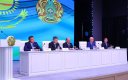
At the XLV regular session of the Almaty Regional Maslikhat, deputies considered two key issues on the regional agenda: the implementation of the Regional Development Plan for 2021–2025 and the approval of the proposed location for the construction of the second nuclear power plant.
The report on the first issue was presented by Erlan Shatanov, Acting Head of the Department of Economy and Budget Planning of the Almaty Region. According to him, the plan is based on four strategic areas covering the social sector, economic development, infrastructure, and institutional reforms. The plan included 99 indicators, most of which had been achieved by the end of 11 months of 2025.
The main focus of the review of the Development Plan implementation was improving the quality of life of the population. In healthcare, dozens of medical facilities have been commissioned in rural areas in recent years, including feldsher-midwife stations, medical outpatient clinics, and health centers. Construction and major repairs of healthcare facilities continue, while the level of equipment provision for medical organizations has exceeded 90%.
Socio-economic changes have also been reflected in the labor market. Since 2022, more than 240,000 jobs have been created in the region. Against this backdrop, the number of recipients of targeted social assistance has decreased almost threefold. Entrepreneurship support programs have played a significant role in this process. Through grant financing and the “Bastau Business” project, residents of the region have received opportunities to start their own businesses and secure stable incomes.
In education, the key priorities remain improving accessibility and the quality of learning. The construction of new schools and the renovation of existing ones have significantly reduced the number of schools operating in three shifts.
In housing construction, the Almaty Region exceeded its annual plan in the first 11 months of the year. More than one million square meters of housing were commissioned, exceeding last year’s figures. Work continues to provide housing for socially vulnerable groups.
Infrastructure development remains among the key priorities. Significant funds have been allocated for the repair of regional and district roads. As a result, the share of roads meeting all regulatory requirements has reached 95%. Work on providing residents with clean drinking water is nearing completion, while gasification of settlements and modernization of electrical networks continue.
The regional economy demonstrates steady growth. Over the past three years, the gross regional product has almost doubled, allowing the Almaty Region to improve its position in the national economic development ranking. The main contribution to growth comes from industry, primarily the manufacturing sector. At the same time, the agro-industrial complex continues to develop, with expanded irrigated land areas and the introduction of water-saving technologies.
The second issue on the session’s agenda concerned the approval of the location for the construction of the second nuclear power plant. A report was delivered by Nurlan Omirkhanov, Acting Head of the Department of Energy and Water Supply of the region.
He noted that the development of nuclear energy has been identified as one of the state’s strategic priorities. In accordance with instructions from the Head of State and the Government, a preliminary technical and analytical assessment of potential sites for the plant was conducted.
Following the work of the interdepartmental commission, the Zhambyl District of the Almaty Region was recognized as a potentially suitable location. The selection considered seismic safety, the availability of engineering infrastructure, water supply conditions, and opportunities for connection to regional and interregional power systems.
“Construction of the second nuclear power plant is considered an element of the country’s long-term energy security and the stability of the southern region’s power system,” Nurlan Omirkhanov noted.
At the current stage, a preliminary environmental impact assessment has been carried out, logistics and infrastructure parameters have been studied, and a list of additional research activities has been identified. In early December, public hearings were held in the Zhambyl District with participation from government representatives, experts, media, and local residents. Following the discussions, the initiative received public support.
In accordance with legislation, the final decision on the construction of nuclear facilities is made by the Government of the Republic of Kazakhstan with the consent of local representative bodies. In this regard, deputies of the regional maslikhat were invited to support the selection of the district for further development of the project.