


The Ministry is a government body of the Republic of Kazakhstan responsible for leadership and cross-sectoral coordination in the fields of aerospace and electronic industries, scientific and technological development of the country, geodesy, cartography, and spatial data, as well as ensuring information security in the areas of informatization, "e-government", personal data and their protection, digital assets, project management, and also in the field of communications, development of state policy in the provision of public services, and data management.
Ministry of Artificial Intelligence and Digital Development of the Republic of Kazakhstan
About Ministry
News
 Open
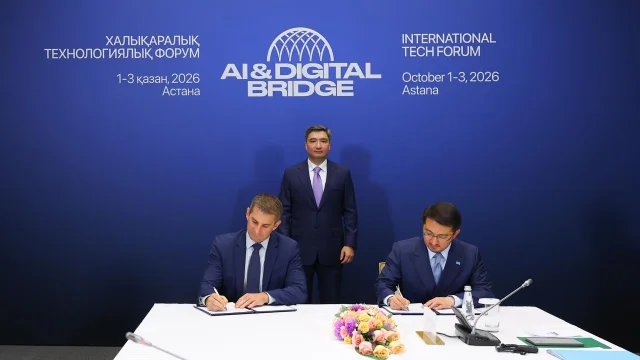
International Crypto Platform Kraken Enters Kazakhstan’s Digital Assets Market
 Open
Astana Hub and Ghent University Open a Joint Artificial Intelligence and Mathematics Laboratory
 Open
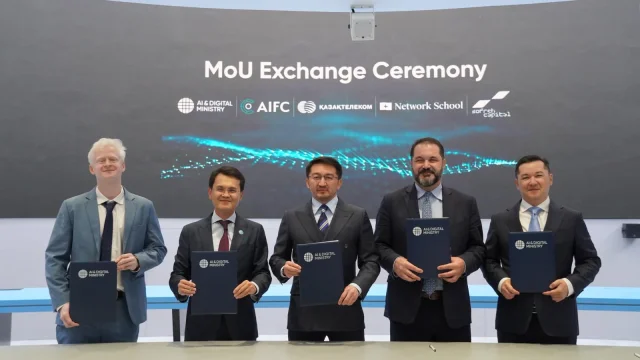
Digital Silk Road: Kazakhstan Brings Together Technology, Infrastructure and Capital to Reach Global Markets
 Open
Winners Announced at AI & Digital Bridge Awards 2026
 Open
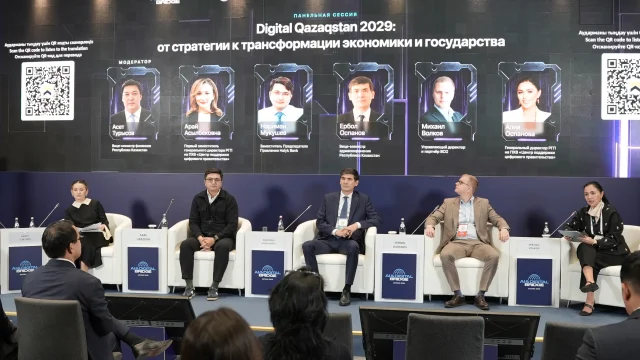
PROACTIVE PUBLIC SERVICES AND AI IN HEALTHCARE: HOW DIGITAL QAZAQSTAN WILL CHANGE LIFE IN KAZAKHSTAN BY 2029
 Open
Head of State Opens the AI & Digital Bridge 2026 International Technology Forum in Astana
Events
SessionFinished
Meeting with the people of the Pavlodar region
On December 27 at 11.00 o'clock the Vice Minister of Digital Development, Innovation and Aerospace Industry of the Republic of Kazakhstan Dmitry Mun will hold a meeting with the population of the Pavlodar region at 12.15 o'clock he will receive citizens on issues within the competence of the Ministry in the building of the College of Information Technologies (address: Pavlodar, Lermontov str., 93). To make an appointment for a personal appointment, as well as questions and suggestions, please call: +7-7182-32-20-04 (during business hours). The online broadcast of the meeting with the population will be broadcast live on the official page of the Ministry of Digital Development, Innovation and Aerospace Industry of the Republic of Kazakhstan on the YouTube social network. We invite citizens to take an active part and ask a question to the Vice Minister of Digital Development, Innovation and Aerospace Industry of the Republic of Kazakhstan. Areas of activity of the Ministry: telecommunications and communications, “electronic government” and public services, aerospace industry, geodesy and cartography, electronics industry, digital asset industry, information security, innovation.
December 27, 2024On-site
SessionFinished
Meeting with the people of the Kyzylorda region
On December 26 at 14.45 hours, the Minister of Digital Development, Innovation and Aerospace Industry of the Republic of Kazakhstan Madiev Zhaslan will hold a meeting with the population of the Kyzylorda region and at 15.55 pm. he will receive citizens on issues within the competence of the Ministry in the House of Friendship building (address: Kyzylorda, st. Y. Zhakhaeva 24). To make an appointment for a personal appointment, as well as questions and suggestions, please call: 8-7242401191 (during business hours). The online broadcast of the meeting with the population will be broadcast live on the official page of the Ministry of Digital Development, Innovation and Aerospace Industry of the Republic of Kazakhstan on the YouTube social network. We invite citizens to take an active part and ask questions to the Minister of Digital Development, Innovation and Aerospace Industry of the Republic of Kazakhstan. Areas of activity of the Ministry: telecommunications and communications, “electronic government” and public services, aerospace industry, geodesy and cartography, electronics industry, digital asset industry, information security, innovation.
December 26, 2024On-site
SessionFinished
Notification of a survey on the Open Dialogue portal
The Ministry of Digital Development, Innovation and Aerospace Industry of the Republic of Kazakhstan notifies the start of a survey on the topic “NJSC “State Corporation “Government for Citizens”. The survey is available at the link: https://dialog.egov.kz/surveycontroller/index#/view?id=5916. We ask you to participate.
November 15, 2024 – November 29, 2024On-site
SessionFinished
Notification of an online conference on the Open Dialogue portal
The Ministry of Digital Development, Innovation and Aerospace Industry of the Republic of Kazakhstan notifies the start of an online conference on the topic “On the development of the aerospace industry in Kazakhstan”. Link to the online conference: https://dialog.egov.kz/conference/4860. We ask you to participate.
November 15, 2024On-site
SessionFinished
Notification of a survey on the Open Dialogue portal
The Ministry of Digital Development, Innovation and Aerospace Industry of the Republic of Kazakhstan notifies the start of a survey on the topic “Digitalization in Kazakhstan”. The survey is available at the link: https://dialog.egov.kz/surveycontroller/index#/view?id=5868. We ask you to participate.
November 1, 2024 – November 15, 2024On-site
SessionFinished
Notification of an online conference on the Open Dialogue portal
The Ministry of Digital Development, Innovation and Aerospace Industry of the Republic of Kazakhstan notifies the start of an online conference on the topic “On the development of the telecommunications industry in Kazakhstan”. The survey is available at the link: https://dialog.egov.kz/conference/4822. We ask you to participate.
November 1, 2024On-site
Question
Do I need another registration and/or notifications, is there a certain regulation regarding the start of maintenance and repair of mining equipment?
Answer
Companies that carry out activities for the maintenance and repair of mining equipment are not persons engaged in digital mining. In this regard, there is no need for registration and/or notification to the authorized body.
Question
By what parameters is illegality determined, or why are «Gray» mining companies called?
Answer
Companies engaged in digital mining activities in violation of the requirements of legislation in the field of electric power industry are conventionally called «gray mining companies».
Question
Are there any restrictions on the power consumption of electricity? Should I get technical specifications specifically for the data center in the room that they plan to rent?
Answer
Questions regarding restrictions on the power consumption of electricity and obtaining technical specifications are regulated by the requirements of regulatory legal acts in the field of electric power industry. In this regard, in order to receive an exhaustive answer, it is necessary to contact the authorized body responsible for the management of the electric power industry of the Republic of Kazakhstan (the Ministry of Energy of the Republic of Kazakhstan) .
Question
Is there a difference between a «data center» and a mining farm?
Answer
The functional purpose of a traditional data center is to process and store data. The activity of mining farms is aimed at the extraction of unsecured digital assets (cryptocurrencies). The consolidation of the concepts of data center and mining farms is not currently reflected in the current legislation. Within the framework of the draft law «On digital assets in the Republic of Kazakhstan», it is planned to adopt the concept of mining farm.
Question
What tax payments are levied on this activity?
Answer
Since January 1, 2022, a fee for the amount of electric energy consumed during digital mining (1 tenge per 1 kW/hour) has been put into effect.
Question
So far, if an individual has not submitted a notification to inform about digital mining activities, then this is not a violation?
Answer
Since January 1, 2022, a fee has been put into effect for the amount of electric energy consumed during digital mining (1 tenge per 1 kW/hour) and activities in the field of digital mining are entrepreneurial activities. In this regard, for the purpose of legal functioning of the mining farm and timely payment of tax obligations, we recommend individuals to carry out mining activities as an individual entrepreneur. Legal entities engaged in digital mining activities inform the authorized body within 30 calendar days about the planned measures for the construction of data processing centers in the form of a paper appeal or in the form of an electronic document.
Documents
Contests
Invitation to Participate in the Open Competition
Invitation to Participate in the Open Competition
Published:
Reference
BRIEFING NOTE on the Role of the Department of Artificial Intelligence and Data Management in Kazakhstan’s Framework for AI Regulation and Safety Assessment
The Republic of Kazakhstan has established a legal and institutional framework for the regulation of artificial intelligence (AI). This framework encompasses statutory requirements for AI system safety and auditing (Articles 18 and 20 of the Law of the Republic of Kazakhstan “On Artificial Intelligence”), a designated authorized government body, and a specialized unit within that body- the Department of Artificial Intelligence and Data Management. Legal Basis for AI System Assessment Article 100 of the Digital Code of the Republic of Kazakhstan establishes a framework for quality audits of digital objects. Paragraph 4 specifically addresses AI systems, requiring assessment of the quality and lawful use of data libraries employed to train AI models, as well as the presence of any prohibited functional capabilities. These requirements are further developed in the Law of the Republic of Kazakhstan “On Artificial Intelligence” (hereinafter, the AI Law). The Law adopts a risk-based classification of AI systems - minimal, medium and high risk and establishes obligations for owners of high-risk systems. In particular, Article 17 prohibits AI systems from being used for covert behavioral manipulation, social scoring and emotion recognition without the individual’s consent, subject to statutory exceptions. In addition, AI legislation requires synthetic (AI-generated) content to be labelled in a machine-readable format. Taken together, the Digital Code and the AI Law provide a comprehensive legislative basis for assessing AI systems, covering the lawful use of data, algorithmic transparency and mandatory content labelling. Digital Code of the Republic of Kazakhstan — Article 100 Government Mandate for AI Safety The AI Law establishes requirements for the safety and security of AI systems under Article 11, risk management under Article 18, and AI system audits under Article 20. These provisions implement a risk-based approach that distinguishes between minimal-, medium- and high-risk systems. High-risk AI systems must undergo an independent audit before they can be included in the lists of trusted AI systems. The assessment process is integrated with the Digital Code, which provides the overarching framework for quality audits of digital objects. Article 13 of the AI Law defines the powers of the authorized body, encompassing strategic, regulatory, implementation and oversight functions. AI safety is therefore an integral element of government regulation, supported by defined administrative mechanisms, institutional responsibilities and accountability requirements for market participants. Law of the Republic of Kazakhstan “On Artificial Intelligence” The Ministry as the Authorized Government Body The Regulations approved by Resolution No. 846 of the Government of the Republic of Kazakhstan, dated 9 October 2025, assign leadership and cross-sectoral coordination in the field of AI to the Ministry of Artificial Intelligence and Digital Development of the Republic of Kazakhstan. The Ministry is the government institution responsible for exercising statutory powers relating to AI regulation, including the safe deployment and use of AI systems. Its responsibilities also include approving criteria for classifying AI systems by risk level, maintaining lists of trusted AI systems, administering the National Artificial Intelligence Platform, and overseeing compliance with AI legislation. Regulations on the Ministry The Department as a Specialized Unit within the Government’s AI Governance Structure The Ministry includes a dedicated Department of Artificial Intelligence and Data Management. Its establishment ensures that AI and data governance functions are supported by a specialized unit within the authorized government body. The Department’s involvement in implementing the AI regulatory framework is evidenced by Order No. 482/НҚ of 13 August 2026. Under paragraph 2 of the Order, the Department is responsible for arranging the state registration and official publication of the rules governing the interaction of the National Artificial Intelligence Platform operator, and for reporting on the completion of these procedures. The Department’s institutional role encompasses methodological support as well as operational regulatory coordination. It oversees the operator’s organizational and technical activities, coordinates the functioning of the National Artificial Intelligence Platform, and facilitates developers’ access to government computing resources and verified datasets. In this capacity, the Department serves as a key implementation component of the government’s AI regulatory framework, supporting the Ministry in carrying out its assigned functions. Regulatory act confirming specific responsibilities of the Department Practical Mechanism for Conducting Audits Order No. 432/НҚ of 23 July 2026 approved the Rules for Conducting Quality Audits of Digital Objects. These Rules establish the procedural framework for implementing the audit mechanism provided for under Article 100 of the Digital Code. The framework clearly distinguishes regulatory rule-making from the performance of audits. The Ministry approves the applicable rules within its statutory remit, while audits are conducted by independent individuals and legal entities with the necessary specialized knowledge and professional experience. Rules for Conducting Quality Audits of Digital Objects Accordingly, the Department of Artificial Intelligence and Data Management operates as a specialized unit of the authorized government body and an institutional component of Kazakhstan’s national framework for AI regulation. Its role is closely connected with statutory requirements concerning AI safety, risk management and independent audits of AI systems.
Published:
Information
Kazakhstan Has Adopted Guidelines on the Use of Artificial Intelligence in Government Bodies
Kazakhstan has adopted the Guidelines on the Application of Artificial Intelligence Technologies by Government Bodies, approved by Order No. 725/НҚ of the Minister of Digital Development, Innovation and Aerospace Industry of the Republic of Kazakhstan, dated 27 November 2024. (source). The Guidelines are intended for government bodies and provide recommendations on the safe use of artificial intelligence (AI) across various areas of public administration, taking into account the requirements of national legislation and the specific considerations associated with handling government data. The Guidelines are advisory in nature and apply to the use of foreign AI services. Particular emphasis is placed on the protection of personal data and confidential official information. The Guidelines address compliance with personal data protection legislation, including obtaining consent where required and anonymising personal data. Government employees are expected to independently verify the accuracy and reliability of AI-generated information. When preparing legal opinions, AI-generated outputs should be treated solely as advisory material, with final decisions remaining the responsibility of qualified professionals. The Guidelines also identify practices that should be avoided when using foreign AI services, including the processing of classified or confidential official information and the preparation of certain materials for senior state officials and the leadership of government bodies. Overall, the Guidelines provide government bodies with a framework for the responsible use of AI, supporting awareness of information disclosure risks and ensuring that human oversight and professional accountability remain central to the use of these technologies.
Published:
Report
Kazakhstan Startup Landscape 2026: The First National Study of Kazakhstan's Startup Ecosystem
Kazakhstan Startup Landscape 2026 is the first national study of Kazakhstan's startup ecosystem, prepared by RISE Research & Advisory in collaboration with Astana Hub and Sapa Group, with the support of the Ministry of Artificial Intelligence and Digital Development of the Republic of Kazakhstan. The study brings together data on more than 1,500 startups, a survey of 602 companies, over 35 interviews with founders and other ecosystem stakeholders, as well as a database of venture capital deals spanning more than eight years. The report traces the journey of startups from their first sales to international expansion, examining industries, technologies, business models, founder profiles, and key growth drivers. The report is available at: www.rise.com.kz
Published:
Information
Cybersecurity as a Foundation for the Safe Adoption of Artificial Intelligence in Kazakhstan
Kazakhstan has established a system for protecting digital infrastructure that brings together state technical services, cybersecurity monitoring and incident response centres, and private expert organisations. Their capabilities provide a foundation for the safe adoption of artificial intelligence in the public sector and business. The development of AI requires protecting not only data and infrastructure, but also applications themselves against interference with their operation. For AI systems, preventing confidential information leaks, controlling access, identifying vulnerabilities, and countering manipulation of input data and user prompts are particularly important. The development of the national cybersecurity system is also reflected in international assessments. In the International Telecommunication Union’s Global Cybersecurity Index 2024, Kazakhstan scored 94.04 out of 100 and was placed in Tier 2 (Advancing). The Index assesses legal, technical and organisational measures, capacity development, and international cooperation. Capabilities established in these areas provide a foundation for further strengthening the security of digital services, including solutions that use artificial intelligence. Sources: ITU — Global Cybersecurity Index 2024 report (countries grouped by tier) ITU — Kazakhstan’s profile in the GCI 2024 report (PDF) ITU — publication on Kazakhstan’s 31st place in GCI 2020 ITU — official GCI page and information on the preparation of the sixth edition Functions of State Technical Service JSC (STS) State Technical Service JSC performs technical functions to ensure the cybersecurity of digital assets, including security testing, software analysis, and infrastructure protection. These activities are directly relevant to digital systems that incorporate artificial intelligence components. STS also addresses AI-specific security risks, including the risk of data leaks when using large language models, unreliable AI-generated information, vulnerabilities in the software environment, and attacks involving the insertion of malicious instructions into model prompts - known as Prompt Injection. AI security is therefore already part of the organisation’s expert agenda. Sources: Law of the Republic of Kazakhstan “On Cybersecurity” — Article 14, Adilet Legal Information System STS JSC — official website STS JSC — information on monitoring and the National Coordination Centre for Cybersecurity Functions of the State Operational Centre for Cybersecurity The State Operational Centre monitors the security of government digital assets, identifies threats and incidents, and supports incident response. Its functions are carried out through the National Coordination Centre operating within STS. When AI is introduced into government information systems, these mechanisms can be used to protect the infrastructure supporting AI services by detecting unauthorised access, suspicious activity, compromised accounts, and data security breaches. Monitoring and incident response provide an essential layer of operational protection, which should be complemented by assessments of risks specific to AI models themselves. Sources: Law of the Republic of Kazakhstan “On Cybersecurity” — Articles 7-4, 9 and 14, Adilet Legal Information System Rules governing the cybersecurity researcher engagement programme, Adilet Legal Information System TSARKA’s Activities in Cybersecurity TSARKA is a private organisation specialising in cybersecurity services. Unlike government bodies and organisations that perform statutory public functions, TSARKA provides professional and commercial services to protect its clients’ digital infrastructure. Its main activities include Security Operations Centre (SOC) services, encompassing round-the-clock event monitoring, cyber incident detection, and incident response support; technical analysis and investigations; penetration testing (Pentest); and security assessments of web applications, mobile applications, APIs, networks, and cloud infrastructure. TSARKA also conducts vulnerability assessments and adversary simulation exercises (Red Team), provides advisory services on secure development and software security testing, and develops the Tumar.One Bug Bounty platform, which connects organisations with independent researchers to identify and remediate vulnerabilities. TSARKA’s functions are therefore primarily service-oriented and involve technical expertise; they do not constitute governmental supervisory or regulatory powers. Sources: TSARKA — official company website TSARKA SOC — round-the-clock monitoring and incident response TSARKA — penetration testing and security assessments TSARKA — Tumar.One Bug Bounty platform
Published:
Information
Kazakhstan has introduced a national standard for the development and use of artificial intelligence
Since 1 January 2026, Kazakhstan has had a national standard in force: ST RK ISO/IEC 5339-2025, “Information technology-Artificial intelligence-Guidance for AI applications.” The standard was appoved by Order No. 64-НҚ of the Chair of the Committee for Technical Regulation and Metrology of the Ministry of Trade and Integration of the Republic of Kazakhstan, dated 23 October 2025. It is identical to the international standard ISO/IEC 5339:2024. The document provides guidance on developing and using AI applications, defining stakeholders’ roles and responsibilities, and assessing system characteristics and the impacts of their use. Particular attention is paid to risk management, security, personal data protection, transparency, and the explainability of AI outputs. For government bodies, the standard can serve as a methodological framework for selecting and implementing AI solutions. Its provisions help define the objectives of using the technology, assess the quality of the data used, establish effectiveness criteria, and consider the potential impact of automated decisions on citizens. This approach supports the responsible adoption of artificial intelligence in public services and government operations.
Published: