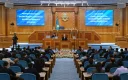
Prague, 26 October 2026 – A roundtable discussion bringing together prominent Czech politicians, diplomats and academics was held in Prague on the occasion of the Republic Day of Kazakhstan. The discussion focused on Kazakhstan’s achievements since independence, the progress of constitutional reforms, key priorities for the country’s political and socio-economic modernisation, and prospects for further strengthening Kazakhstan-Czech cooperation.
In his welcoming remarks, Ambassador of Kazakhstan to the Czech Republic Kairat Abdrakhmanov highlighted the symbolic significance of holding the event ahead of the Republic Day of Kazakhstan and the Day of the Establishment of the Independent Czechoslovak State. He emphasised the importance of national sovereignty, sustainable development, and the consistent strengthening of state institutions and civil society for the peoples of both countries. The Ambassador outlined Kazakhstan’s key achievements over 35 years of independence, presenting statistical data on the steady development of the national economy, rising living standards, expanding international ties and the country’s strengthened standing on the global stage. Particular attention was paid to Kazakhstan’s tangible contribution to international security, including its renunciation of its nuclear arsenal, the closure of the Semipalatinsk Test Site, the promotion of dialogue and multilateral cooperation, and its active engagement in the work of the United Nations, the Organization for Security and Co-operation in Europe (OSCE) and other international organisations.
Representatives of the Czech academic and expert community expressed keen interest in the implementation of constitutional reform in Kazakhstan, viewing it as a logical continuation of the country’s sustained political modernisation and the adaptation of state institutions to the evolving needs and expectations of society. Participants were briefed on efforts to uphold the rule of law, enhance the effectiveness of public administration and expand opportunities for citizens - including representatives of different ethnic groups and religious communities - to participate in Kazakhstan’s public and political life. Particular attention was drawn to the introduction of new institutions, including the Kurultai, the Halyq Kenesi (People’s Council) and the office of Vice-President. It was emphasised that the constitutional changes should not be viewed in isolation, but rather as part of a broader process of democratic transformation encompassing the economy, the social sphere and public administration.
Participants also examined Kazakhstan’s reforms in light of Czech political experience, constitutional law and the current geopolitical landscape. In this context, Kazakhstan’s balanced and constructive foreign policy under President Kassym-Jomart Tokayev was recognised as having earned considerable respect among political and business communities worldwide. Discussions highlighted Kazakhstan’s role in promoting international and regional stability and strengthening cooperation between Central Asian countries and the European Union, particularly in transport connectivity and critical raw materials. Participants also explored opportunities to draw on the Czech Republic’s expertise, academic strengths and technological capabilities to advance mutually beneficial bilateral relations.
Drawing on its own experience, the Czech side put forward concrete proposals for enhancing cooperation among the branches of government in order to strengthen public trust in state institutions. Practical recommendations were also offered on advancing several of Kazakhstan’s initiatives, including the proposal to establish an International Water Organisation, in view of the growing importance of water security and the challenges posed by climate change.
The discussion reaffirmed the mutual commitment to further strengthening the traditionally friendly relations between Kazakhstan and the Czech Republic. Both sides highlighted the importance of expanding cooperation in political, trade and economic, industrial, transport and logistics, educational, cultural, scientific and technological fields. Intensive contacts between the leadership of the two countries, their ministries and agencies, as well as business communities, continue to play an important role in advancing this partnership.
The roundtable provided a valuable platform for an in-depth exchange of views on Kazakhstan’s ongoing transformation, its significance for the country’s future development and the prospects for bilateral cooperation, which is increasingly taking on a strategic dimension. Participants noted that such initiatives help strengthen mutual understanding, broaden expert contacts and identify new avenues for Kazakhstan-Czech cooperation.