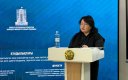
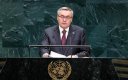
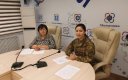
The East Kazakhstan Regional Scientific and Methodological Center for Informatization and Education Development "Örken" of the Education Department of East Kazakhstan Region, together with S. Amanzholov East Kazakhstan University, held the regional symposium "Evidence-Based Practice and Interagency Cooperation in Supporting Children with ASD" on September 21, 2026, dedicated to the 10th anniversary of the opening of the Municipal State Institution "Center for Support of Children with Autism (Autism Spectrum Disorder) 'Asyl Miras'".
The symposium was attended by teachers, special educators, heads of special education organizations, students, and medical professionals of the region.
The event was held with the participation of B.Zh. Kozybayeva, Deputy Head of the Education Department of East Kazakhstan Region; G.K. Murzalinova, Deputy General Director – Financial Director of the Bulat Utemuratov Foundation; G.S. Dzharasova, Rector of S. Amanzholov East Kazakhstan University; representatives from the healthcare sector, as well as parents.
For ten years, the "Asyl Miras" center has not only provided direct support to children with autism spectrum disorders but has also conducted advisory and methodological work with parents and educators, contributing to the enhancement of professional competence among specialists. The anniversary symposium became a platform for analyzing the experience accumulated over these years, discussing modern approaches, and defining future tasks.
In recent years, the issue of quality and timely support for children with autism spectrum disorders has become particularly relevant in Kazakhstan. Between 2016 and 2026, the number of registered children with ASD has almost tripled. This indicates the need for further improvement of the early detection and early intervention system.
Comprehensive support for a child with autism is not a task for one single sector. Already at the stage of early identification of a child's needs, coordinated interaction between educators, medical professionals, psychologists, special educators, social workers, and parents is necessary. That is precisely why special attention at the symposium was paid to issues of interagency cooperation.