T he International Institute for Middle East and Balkan Studies ( IFIMES) in Ljubljana regularly analyzes developments in the Middle East, the Balkans and around the world. Its latest analysis, entitled “ The Republic of Kazakhstan: From the Declaration of State Sovereignty to Middle-Power Status in 36 Years/Республика Казахстан: от Декларации о государственном суверенитете до статуса средней державы за 36 лет ”, examines Kazakhstan’s 36-year journey of statehood, its multi-vector foreign policy, economic diversification, digital transformation and regional connectivity, with particular emphasis on strengthening cooperation with Slovenia and the European Union. Presented below are the key highlights of the analysis.
The Republic of Kazakhstan: From the Declaration of State Sovereignty to Middle-Power Status in 36 Years
O n 25 October, Kazakhstan celebrates Republic Day, a national holiday of particular historical significance for the formation of modern Kazakh statehood. On this day in 1990, the Declaration of State Sovereignty of the Kazakh Soviet Socialist Republic was adopted, marking a major political and legal milestone on the path to independence. Thirty-six years later, the principles set out in the Declaration—sovereignty, territorial integrity, autonomy and responsibility for the country’s own future—continue to shape Kazakhstan’s strategic development.
For Kazakhstan, the date is not only an opportunity to look back at the origins of modern statehood, but also to reflect on the journey so far, assess the results achieved and identify priorities for further development. At a time of profound change in international relations, accelerating technological advances and growing interdependence among states, a country’s ability to set its own national priorities, modernise its economy consistently and strengthen the confidence of international partners takes on particular importance.
Historical Choices and the Formation of Statehood
A dopted on 25 October 1990, the Declaration of State Sovereignty was one of the key documents that established the political and legal foundations of Kazakhstan’s future independence. It enshrined the principles of autonomy for the republican authorities, territorial integrity, citizenship, economic independence and the right to conduct independent international relations. The document thus marked a transition to a new understanding of the state’s responsibility to its people and laid the groundwork for the subsequent formation of the independent Republic of Kazakhstan.
The proclamation of state independence on 16 December 1991 was a natural continuation of this historical process. The country faced enormous tasks: establishing independent state institutions, creating a national legal system, transitioning to a market economy, building foreign-policy ties and integrating into the international community. These processes unfolded in difficult economic and geopolitical conditions, requiring both strategic vision and the ability to make complex practical decisions.
In the first years of independence, Kazakhstan established the fundamental principles of its statehood: preserving territorial integrity, strengthening interethnic harmony, developing national culture, maintaining domestic stability and pursuing an independent foreign policy. The multinational character of society became not an obstacle but an important factor in shaping a model of statehood in which civic identity is combined with respect for cultural and linguistic diversity.
Building its own system of international relations was of vital importance. Kazakhstan established diplomatic ties with countries around the world, joined international organisations and treaties, and created a legal framework for trade, economic and humanitarian cooperation. Membership in the United Nations since 1992 confirmed the country’s standing as a full-fledged member of the international community.
From the outset, independence was therefore regarded not merely as a political and legal status, but as a practical opportunity to determine the course of national development independently, protect citizens’ interests and build relations with other states on the basis of mutual respect and equality.
Restoring and strengthening statehood required considerable effort. Yet it was during this period that the foundations were laid for Kazakhstan’s modern institutional system, its international standing and its long-term development strategy.
Kazakhstan in a Changing International Order
S ince the early years of independence, Kazakhstan has pursued a foreign policy grounded in the protection of national interests, the development of good-neighbourly relations, pragmatism and cooperation with diverse centres of global economic and political influence. The country’s geographic position and international economic ties make a broad range of partnerships and the ability to navigate complex global interdependencies an objective necessity.
In this context, a multi-vector foreign policy means seeking constructive relations with states and international organisations on the basis of sovereign equality, respect for territorial integrity, non-interference in internal affairs and the peaceful settlement of disputes. Its practical value lies in expanding diplomatic room for manoeuvre, economic cooperation and the protection of national interests.
As geopolitical tensions intensify, preserving international law and the effectiveness of multilateral institutions becomes especially important. For states with an interest in stability, predictability and free trade, compliance with international norms is an essential precondition for long-term development.
Kazakhstan consistently supports dialogue and multilateral cooperation within the United Nations. The country’s priorities include international security, sustainable development, nuclear non-proliferation, confidence-building and resolving regional issues through negotiations. These priorities are reflected in the Concept of the Foreign Policy of the Republic of Kazakhstan for 2020–2030.
Nuclear disarmament occupies a special place in Kazakhstan’s international profile. The decision to close the Semipalatinsk Nuclear Test Site in 1991 and the subsequent renunciation of the inherited nuclear arsenal were important milestones in the country’s history and in international security policy. This experience remains a significant part of Kazakhstan’s contribution to global efforts to prevent the proliferation of nuclear weapons and strengthen international trust.
The regional dimension of foreign policy is also strategically important. Central Asia’s resilience depends on the development of trade ties, the rational use of water resources, transport connectivity, energy cooperation and joint efforts to address environmental challenges. None of these issues can be effectively resolved by countries acting alone.
Closer cooperation among the countries of Central Asia expands the region’s ability to pursue independent economic development, enhance its international competitiveness and respond to shared challenges in a coordinated manner. Kazakhstan regards regional stability and development as important conditions for its own long-term security and prosperity.
At the same time, the country is interested in deepening engagement with the European Union and its member states. European partners are of considerable interest in industry, energy, transport, education, science, digital technologies and environmental modernisation. For Kazakhstan, such cooperation offers a way to expand export opportunities, attract investment and gain access to advanced technological solutions.
Ultimately, a country’s international role is determined not only by its economic resources or geographic position, but also by its ability to turn these advantages into practical results, sustain dialogue and consistently honour its commitments.
Economic Transformation: From Adaptation to Diversification
S ince independence, Kazakhstan’s economy has undergone profound structural change. The country has established its own financial system, national currency, institutions for regulating economic activity and mechanisms for attracting foreign investment. The development of natural resources, industry and infrastructure, together with the expansion of trade ties, has enabled Kazakhstan to strengthen its position in the regional and global economy.
Natural resources remain an important part of the country’s economic potential. Kazakhstan has substantial reserves of hydrocarbons, uranium, non-ferrous and rare metals, as well as significant agricultural capacity. The country’s resource base could underpin new production chains, provided that processing and technological capabilities are developed. According to the World Bank, Kazakhstan has more than 5,000 unexplored deposits of rare and rare-earth metals, with an estimated potential value exceeding US$46 trillion.
However, the long-term resilience of the economy depends not only on using these advantages effectively, but also on broadening the production base, raising labour productivity, developing competitive processing industries and creating new sources of growth.
That is why economic diversification, the development of non-commodity exports and investment in high-value-added sectors are of strategic importance. The aim is a gradual shift from a model in which extractive industries play a substantial role towards a more sophisticated economic structure built on technology, skilled workers, efficient infrastructure and entrepreneurial initiative.
Kazakhstan’s economic performance in recent years reflects both growing business activity and the ongoing challenge of diversification. According to revised data from the Bureau of National Statistics, the country’s GDP reached 159.6 trillion tenge in 2025, representing real growth of 6.5 per cent; at the average exchange rate for the year, this was equivalent to approximately US$306 billion. As part of a new investment cycle and its economic development framework, Kazakhstan plans to attract an additional US$150 billion in foreign investment by 2029. The highest growth rates were recorded in transportation and storage, construction, trade, industry, and information and communications. During the first nine months of 2026, the short-term economic indicator rose by 4.8 per cent year on year. This performance points to broader activity across a range of sectors, although its long-term sustainability will depend on productivity gains and the development of non-commodity production. In August 2026, S&P Global Ratings raised the country’s sovereign rating to BBB with a stable outlook; Moody’s maintains its rating at Baa1 with a stable outlook. These assessments describe the government’s creditworthiness, but do not in themselves replace an analysis of investment quality, productivity or the sustainability of growth. Foreign trade and transport connectivity add to this picture. According to the Bureau of National Statistics, Kazakhstan’s total trade with all foreign partners amounted to US$143.9 billion in 2025. The country’s geographic position creates opportunities to develop transit between Asia and Europe, but realising them depends on infrastructure capacity, logistics efficiency and the predictability of freight movements. International indicators related to innovation, education and digital skills also show changes. In the WIPO Global Innovation Index 2026, Kazakhstan ranked 73rd; the organisation noted the country’s most significant rise in the Central and Southern Asia region.
These indicators reflect an expansion of economic activity beyond the traditional commodity sector. At the same time, the sustainability of this growth will depend on the country’s ability to improve investment efficiency, develop domestic competition, strengthen the business environment and enable small and medium-sized enterprises to play a broader role in creating added value.
It is important to move from an approach to investment policy focused primarily on volume to a more selective model centred on project quality, technological content, export potential and long-term benefits for the national economy. Investment in raw-material processing, engineering, the agro-industrial sector, pharmaceuticals, digital solutions and logistics can support economic growth while strengthening resilience to external volatility.
The development of entrepreneurship remains equally important. Small and medium-sized enterprises create jobs, make the economy more flexible and provide a basis for the diffusion of innovation. Their further development requires access to finance, predictable regulation, effective protection of property rights and a level playing field for competition.
Ultimately, economic modernisation should be assessed not only by macroeconomic indicators. Its most important test is whether it gives citizens broader opportunities for employment, professional fulfilment and a better quality of life.
Transit Potential and a New Economic Geography
K azakhstan’s position between Europe and Asia has historically shaped its role in regional exchange. Today, this advantage is gaining further importance as international logistics chains are reconfigured, e-commerce expands and businesses seek alternative routes for transporting goods.
Kazakhstan is developing transport infrastructure, rail and road corridors, logistics hubs and multimodal solutions. The Trans-Caspian International Transport Route, known as the Middle Corridor, plays an important role in this system, linking China and Central Asia with the Caucasus and European markets via the Caspian and Black Seas.
The development of such routes matters for more than transit revenues. It helps expand trade opportunities, improve connectivity between regions, attract logistics operators and create new avenues for industrial cooperation. The competitiveness of transport corridors, however, is determined by more than geography alone: it requires harmonised customs procedures, predictable delivery times, efficient port infrastructure and digital data exchange among all parties involved in freight transport.
In this respect, cooperation with European partners offers Kazakhstan additional opportunities. The European market is of interest not only as an export destination, but also as a source of technology, engineering solutions, investment expertise and modern standards for infrastructure management.
At the same time, Kazakhstan needs to develop its own logistics and production base so that it serves not only as a transit territory but also as a place where high-value-added goods and services are created. It is the combination of transport connectivity, industrial development and technological renewal that can turn geographic position into a lasting competitive advantage.
Digital Transformation and Artificial Intelligence
D igitalisation is becoming one of the most significant drivers of contemporary development. It is changing how governments and citizens interact, how businesses operate, and how education, healthcare and international trade are organised. For Kazakhstan, the development of digital technologies offers an opportunity to accelerate economic modernisation, improve public services and broaden access to knowledge and innovation.
A key condition for digital transformation is the creation of a comprehensive ecosystem that brings together government agencies, universities, research centres, entrepreneurs and international technology partners. Sustainable results depend not only on introducing new software solutions, but also on developing skills, ensuring access to digital infrastructure, protecting data and building trust in technology.
Artificial intelligence is attracting particular attention. Its use offers prospects for improving industrial efficiency, refining transport planning, analysing agricultural data, advancing personalised medicine and automating administrative processes. At the same time, wider use of AI calls for a responsible approach to safety, algorithmic transparency, personal data protection and workforce training. In the Government AI Readiness Index 2025, which assesses the readiness of public institutions to use artificial intelligence, Kazakhstan ranked 60th among 195 countries. These results show progress, but further improvement will require sustained investment in science, universities, workforce development and the adoption of technology across the economy. In the UN E-Government Development Index (eGov), Kazakhstan rose from 29th to 24th place globally, entering the top 25 digital governments.
Human Capital: The Foundation of Long-Term Progress
N either natural resources, geographic position nor technological infrastructure alone can guarantee sustainable development. Ultimately, the decisive factors are people’s knowledge, skills, health and initiative.
Kazakhstan’s cultural diversity is also a significant asset. The Kazakh language and national traditions are an essential part of the country’s historical heritage, while multilingualism and openness to international engagement broaden opportunities for citizens in education, science, diplomacy and business.
Preserving historical memory, developing culture and supporting creative initiatives are not secondary objectives; they are part of long-term social development. They strengthen ties between generations, help shape civic identity and enable Kazakhstan to present itself to international audiences through its history, art, literature and traditions.
In 2026, Kazakhstan entered a new stage of constitutional development: the Constitution adopted at the national referendum on 15 March came into force on 1 July 2026. Official materials on the new Basic Law emphasise the importance of sovereignty and independence, human rights and freedoms, the supremacy of the Constitution, national unity, knowledge, innovation and human-capital development.
Kazakhstan and Slovenia: 34 Years of Diplomatic Relations
Cooperation with Slovenia—a country with which Kazakhstan shares more than three decades of diplomatic relations, mutual respect and a common interest in practical partnership—holds a special place in Kazakhstan’s European foreign policy.
Diplomatic relations between the Republic of Kazakhstan and the Republic of Slovenia were established on 20 October 1992. Over the past 34 years, bilateral engagement has gradually expanded to include political dialogue, trade, investment, industrial cooperation, culture, education and scientific ties.
An important milestone in the development of bilateral relations was the official visit of Slovenian President Nataša Pirc Musar to Kazakhstan in March 2025. The agreements reached gave fresh impetus to discussions on the prospects for economic cooperation and the practical implementation of joint initiatives. In 2024, Kazakhstan opened an Embassy in Slovenia, creating additional institutional capacity to develop bilateral ties.
Economic cooperation between the two countries has considerable potential. Kazakhstan is interested in European technology, investment and production expertise, while Slovenian companies have experience in pharmaceuticals, medical technology, industrial equipment, digital solutions and other high-value-added sectors.
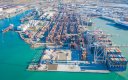
Promising areas of cooperation include pharmaceuticals and biotechnology, digitalisation, artificial intelligence, transport and logistics, energy, industrial cooperation and infrastructure development. Practical issues include making use of the Port of Koper in Slovenia to expand Kazakhstan’s transport and logistics links with European markets.
Trade turnover between Kazakhstan and Slovenia amounted to €193.5 million in 2025, an increase of 20.6 per cent compared with 2024. Trade turnover in 2024 totalled €160.4 million, while from January to August 2026 it amounted to €132.2 million. Further deepening of cooperation will involve not only increasing trade volumes, but also expanding joint projects, production links, technology exchange and contacts between business communities. Intergovernmental mechanisms, direct company-to-company contacts, cooperation among research institutions and the development of educational programmes can all play an important role in this process.
Humanitarian ties remain equally important. Exchanges between universities, cooperation among researchers, cultural events and tourism contacts help people in both countries learn more about each other’s history, traditions and contemporary achievements. These ties provide a strong public foundation for a long-term partnership.
The 34th anniversary of diplomatic relations is an opportune moment not only to take stock, but also to identify new practical priorities. Kazakhstan and Slovenia have the potential to expand cooperation further, drawing on the complementary nature of their economies, their shared interest in innovation and their commitment to strengthening links between Central Europe and Central Asia.
Conclusion
T he 36th anniversary of the adoption of the Declaration of State Sovereignty takes us back to the origins of modern Kazakhstan and reminds us that statehood is not only a historical legacy, but also an enduring responsibility for the country’s future.
Over the past decades, Kazakhstan has established its own state institutions, strengthened international ties, developed its economy and broadened its participation in regional and global affairs. At the same time, further progress requires sustained efforts to diversify the economy, improve the quality of public governance, develop human capital, modernise technology and strengthen infrastructure resilience.
Relations with Slovenia form part of Kazakhstan’s broader strategy to strengthen partnerships with European countries. Joint projects in industry, pharmaceuticals, logistics, science and digital technologies can contribute not only to the growth of bilateral trade, but also to new links between the economies of Central Asia and the European Union.
Kazakhstan is entering the next stage of its history, drawing on its accumulated experience, economic potential and human capital. The country’s ability to meet the challenges of the 21st century and create new opportunities for future generations will depend on how successfully it combines these resources with strong institutions, innovation and international partnership.
Ljubljana/Brussels/Bishkek/Astana, 20 October 2026