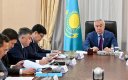
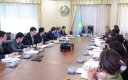
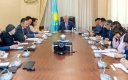
At a meeting of the Economic Growth Headquarters chaired by Deputy Prime Minister and Minister of National Economy Serik Zhumangarin, the results of economic development for the first seven months of 2026 and plans for January–August were reviewed.
Particular attention is being paid to the mining industry, particularly the restoration of oil production volumes. In the first seven months of this year, 53.2 million tons of oil were produced, or 91.1% of the same period last year. Total oil production is projected to exceed 60 million tons by the end of the first eight months.
In the manufacturing industry, growth of 9% was achieved in the first seven months. However, a slight decline was noted in the metallurgy sector, with the index of actual production reaching 97.3%, including 95.4% in non-ferrous metallurgy. This is primarily due to a decline in gold production, which nevertheless recovered for the second month in a row. 39.3 tons of gold were produced in the first seven months. The plan for January-August is 45.8 tons. For the year, the index of actual production in non-ferrous metallurgy is projected to reach 103%.
Mechanical engineering remains one of the main drivers of the manufacturing industry, accounting for 17.2% of the industry, second only to metallurgy, which accounts for approximately 42.8%. From January to July, mechanical engineering production grew by 22%. The automotive industry demonstrated the highest growth rates, growing by 29.9%. 102,870 passenger cars were produced—36% more than the previous year; 1,612 buses—an 18% increase; and 4,732 trucks and special-purpose vehicles—a 3.2% increase.
The chemical industry continued to show strong growth, with the volume index reaching 126.9%. This growth was driven by increased production of ammonium phosphate (AMF) by 7.8%, ammonium nitrate (AMN) by 10.8%, polypropylene (AP) by 14.7%, sulfuric acid (AMN) by 20.7%, and other substances.
The meeting also noted the production rates of household appliances. Silk Road Electronics LLC, which produces washing machines, televisions, stoves, mini-ovens, water heaters, vacuum cleaners, and hoods under the ARTEL and Samsung brands, increased production by 38% over the first seven months. Similar growth rates are planned for the first eight months. Almaty Turmystyq Tehnika Zayyty LLC increased production by 34%, while JASYL SUYQ QAZAQSTAN LLC, which produces refrigeration and freezing equipment, increased production by 3.2 times.
Construction materials production for the first seven months amounted to 9.5 million tons, with a volume index of 109.4%. However, this growth rate has slowed slightly compared to the first half of the year (114.1%). Given the high growth rates in the construction industry, where the volume index stands at 115.3%, Serik Zhumangarin instructed the Construction Committee to hold meetings with the largest construction materials manufacturers to determine the reasons for the slowdown in production growth and the necessary measures to increase output.
In agriculture, the volume index for January-July was 105%, compared to 103.7% for the same period last year. Agricultural enterprises have now begun the mass harvest, a key stage in building the industry's annual production volumes.
Food production increased by 13.9% over the first seven months of the year, compared to the planned 14.7%. A 14% increase is planned for January-August. Thirty-three agricultural processing projects worth a total of 122.4 billion tenge are planned for completion by the end of the year. These include the Fufeng corn processing plant and a new sugar beet processing line at the Taraz Sugar Refinery.
In beverage production, the volume index for the first seven months was 101.7%, compared to the planned 104.4%. In particular, soft drink production increased by 3%. The slowdown was due to the scheduled maintenance of a Coca-Cola production line in Almaty from January 15 to July 10, as well as the reallocation of PepsiCo production. A Carlsberg plant with a capacity of 340 million liters per year, which will manufacture PepsiCo products, is scheduled to open in September and October. Taking into account the new capacity, the volume index is expected to reach 110.5% by the end of the year.
Summarizing the meeting, Serik Zhumangarin instructed government agencies, together with large non-resource companies, to thoroughly analyze the factors hindering production. Meetings with key manufacturers in each sector are required to identify existing barriers and take measures to eliminate them.
"We need to work directly with companies and understand the situation for each major manufacturer: what constraints exist to increasing production, where government action is required, and where assistance with infrastructure, raw materials, or other issues is needed. Our task is to promptly identify such barriers and help remove them," emphasized Serik Zhumangarin.
https://www.gov.kz/memleket/entities/economy/press/news/details/1273810?lang=en