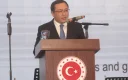
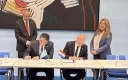
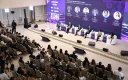
The Hague, 29 October 2026 – Ambassador of the Republic of Kazakhstan to the Kingdom of the Netherlands Akan Rakhmetullin and Chairperson of the Management Board of the International Center for Interfaith and Interreligious Dialogue, Gulsana Kozhabay, participated in the 5th UNESCO Global Forum against Racism and Discrimination, held in The Hague on 29–30 October 2026.
The Forum was organised jointly by the Government of the Netherlands and UNESCO under the theme “From Commitment to Accountability: Change the System, Change the Future.”
The opening ceremony was attended by His Majesty King Willem-Alexander of the Netherlands, Prime Minister of the Netherlands Rob Jetten, high-level representatives of UNESCO, the European Commission and the United Nations, as well as prominent international advocates engaged in combating racism and discrimination.
Bringing together representatives from more than 85 countries, the Forum served as an important international platform for discussing efforts to combat racism, discrimination and intolerance, promote equality, protect human rights and strengthen social cohesion. Particular emphasis was placed on translating political commitments into concrete measures aimed at preventing discrimination and fostering inclusive societies.
Kazakhstan's participation in the Forum reflects the country's national policy aimed at strengthening interethnic and interfaith harmony, ensuring equal rights for all citizens and promoting a culture of mutual respect. An important role in advancing these principles is played by the Kazakhstan People's Council, which contributes to strengthening social harmony and civic unity.
The Congress of Leaders of World and Traditional Religions, initiated by Kazakhstan, makes a significant contribution to advancing international dialogue on tolerance and mutual respect. In particular, the 8th Congress, held in Astana in September 2025, reaffirmed the continued relevance of this platform in promoting interreligious understanding, countering intolerance and fostering a culture of peace.
These efforts were further advanced through the 2nd Joint Colloquium between Kazakhstan and the Holy See, dedicated to protecting the rights and dignity of vulnerable children, as well as the 24th Meeting of the Secretariat of the Congress of Leaders of World and Traditional Religions, both held in Astana in October 2026. The discussions focused particularly on safeguarding human dignity, strengthening interreligious solidarity, addressing the ethical implications of artificial intelligence and highlighting the role of religious communities in responding to global challenges.