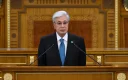
President of Kazakhstan Kassym-Jomart Tokayev outlined the country’s priorities in his State of the Nation Address, “Kazakhstan’s Current Priorities in a New Historical Cycle”, focusing on infrastructure modernisation, investment, energy security and technological development. The Address comes as Kazakhstan marks 35 years of independence and implements its new Constitution, which entered into force on 1 July 2026.
The centrepiece is the “People’s Construction” programme. Approximately 6.5 trillion tenge (US$14.27 billion) from the National Fund is planned for infrastructure modernisation by the end of 2029. Of this amount, 1.5 trillion tenge is earmarked for social projects during 2026 and the first two months of 2027. The initial phase includes around 70 healthcare facilities and 50 educational, sports and cultural facilities. Tokayev proposed declaring 2027 the Year of Nationwide Large-Scale Construction.
According to International Monetary Fund projections cited in the Address, Kazakhstan’s GDP is expected to approach US$400 billion in 2026, with GDP per capita exceeding US$19,000. Manufacturing accounts for more than 14% of GDP, while combined international reserves and National Fund assets exceed US$130 billion.
Energy and transport priorities include achieving a sustained electricity surplus by 2029, potentially beginning construction of the Balkhash nuclear power plant in 2027, and advancing the Moyynkum nuclear project. The Bakhty–Ayagoz railway, scheduled to open in 2027, is expected to add 20 million tonnes of annual freight capacity between Kazakhstan and China. The Aral–Caspian corridor is designed to shorten the Trans-Caspian route by approximately 1,000 kilometres.
Digital transformation and industrial diversification will focus on artificial intelligence, digital infrastructure, critical minerals and domestic manufacturing. Two supercomputers are already operational, with a third planned before the end of 2026.
Key socioeconomic measures include:
- Raising the monthly minimum wage from 85,000 to 110,000 tenge from 1 January 2027, benefiting approximately 1.8 million people.
- Increasing remuneration for primary healthcare specialists by up to 40%.
- Supporting small and medium-sized businesses, improving the investment climate and expanding long-term lending.
- Modernising agriculture and improving water resource management.
- Preparing proposals for public administration reform by 1 June 2027.
President stressed that reforms must improve citizens’ quality of life, create employment and strengthen the country’s economic capacity. National unity, the rule of law and accountable governance were identified as foundations for building a “Just, Strong, Clean and Progressive Kazakhstan”.