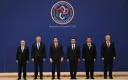
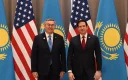
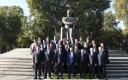
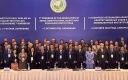
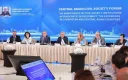
On 23 October 2026, Talgat Sharipov, Consul General of the Republic of Kazakhstan in Samarkand, took part in the international scientific and practical conference entitled “Cultural, Linguistic and Literary Issues of Integration Processes in Central Asia.” The event was held at the Institute of Languages and Cultures of the Peoples of Central Asia at Sharof Rashidov Samarkand State University.
The conference brought together leading scholars, linguists, philologists, literary scholars and experts from Central Asian countries and Türkiye.
In his welcoming remarks, Talgat Sharipov highlighted the key role of scientific, cultural and humanitarian cooperation in strengthening interstate relations. He stressed the need to preserve the shared historical heritage and further deepen intercultural dialogue. The diplomat paid particular attention to the role of linguistic and literary ties in bringing peoples closer together, strengthening good-neighbourly relations and expanding partnerships between relevant academic institutions.
Conference participants discussed current issues concerning the preservation of cultural identity, the development of humanitarian ties and prospects for cooperation in education and science. Panel sessions featured presentations on shared historical roots, linguistic parallels and literary connections.
Kazakhstan was represented at the conference by Elmira Zulpikharova, Professor in the Department of History at the Faculty of Social Sciences and Humanities of Khoja Akhmet Yassawi International Kazakh-Turkish University. She delivered a presentation entitled “Қазақ және өзбек тілдеріндегі ортақ кісі есімдері” (“Personal Names Shared by the Kazakh and Uzbek Languages”), in which she explored similarities in personal naming traditions as compelling evidence of the deep historical and cultural ties between the two peoples.
Overall, the presentations demonstrated the diversity of scholarly approaches to studying the languages, literature and traditions of the Turkic world and the Persian-Tajik cultural sphere, while reaffirming the importance of academic diplomacy. The event served as a prominent platform for exchanging views and developing practical recommendations aimed at advancing integration and strengthening stability in Central Asia.