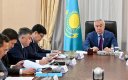
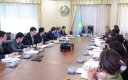
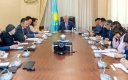
At a meeting of the Project Office for the Implementation of the Tax Code, chaired by Deputy Prime Minister - Minister of National Economy Serik Zhumangarin, the legal status of the self–employed was reviewed.
Self–employed is a category of economically active citizens introduced by the new Tax Code. It includes individuals who independently provide services or perform work without registering as an individual entrepreneur, do not use hired labor and comply with the conditions established by tax legislation.
At the same time, the current legislation does not yet classify the self-employed as business entities. As a result, the official statistics of small and medium-sized businesses do not take into account this category of citizens, which creates a legal conflict between the Tax, Business and Social Codes. It was this issue that was brought up for discussion by the Project Office participants.
According to the new Tax Code, individuals who are not individual entrepreneurs, carry out activities according to the permitted list, do not employ employees and receive an income of no more than 300 MCI per month can apply a special tax regime for the self-employed. Under this regime, only social payments are paid – only 4%.
The new mode is already showing a high level of demand. According to the State Revenue Committee, 688.8 thousand self-employed people have registered since the beginning of the year. Of these, 597,000 people (87%) work through the digital platforms Yandex, InDrive, Wolt, etc. Another 91.5 thousand (13%) operate independently.
At the same time, 84.2 thousand self-employed people were previously individual entrepreneurs, while 546.4 thousand people had not previously been registered as entrepreneurs at all. Thus, more than 500,000 citizens entered the official employment sector and the tax system for the first time.
At the same time, the meeting participants noted that further discussion requires determining the legal status of the self-employed. It is necessary to determine whether self-employment is an independent form of economic activity, an intermediate stage for the transition to entrepreneurship, or a special category of employment. Further regulation in the Business and Social Codes depends on this.
During the meeting, the Ministry of National Economy also provided an overview of international practice. In Belarus and Uzbekistan, the self-employed cannot hire employees, while in Uzbekistan they are not considered business entities. There is a microenterprise regime in Armenia. In Russia, individuals who apply the professional income tax are included in the system of small and medium-sized businesses, although the term "self-employed" is not used in tax legislation.
As a result of the discussion, it was decided not to include changes regarding the consolidation of the status of the self-employed in the Social and Business Codes in the current package of amendments. It is planned to return to consideration of this issue next year, when the practice of applying the new regime will be formed and the results of its work will be accumulated.
The meeting participants also considered issues of taxation of operations in the balancing electric energy market for subsurface users operating under production sharing agreements.
Since July 1, 2023, the balancing electricity market in Kazakhstan has been operating in real time with hourly accounting. All calculations on deviations between planned and actual volumes of electricity are carried out through JSC "Kazakhstan Operator of the Electric Energy and Capacity Market".
At the same time, the current rules stipulate that market participants operating under production sharing agreements in some cases do not receive compensation if negative imbalances exceed the cost of purchasing electricity. The meeting participants noted the need for additional legislative regulation of this issue.
https://www.gov.kz/memleket/entities/economy/press/news/details/1260939?lang=ru