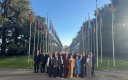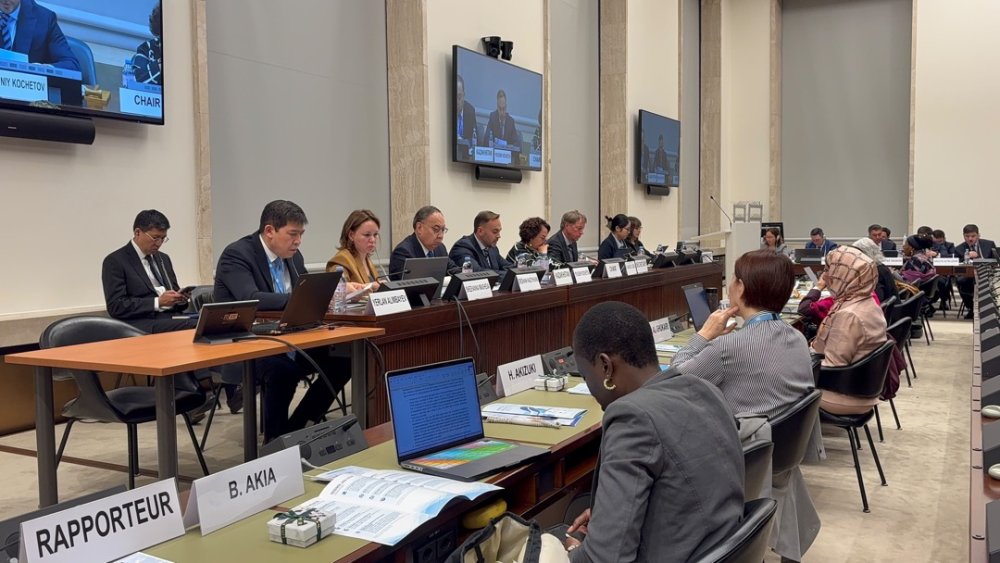
Geneva, 6 October 2026 – Kazakhstan presented to the United Nations the concrete results of systemic reforms aimed at protecting women’s rights, expanding their participation in decision-making, ensuring economic opportunities and strengthening protection against violence.
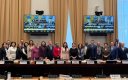
During the review of the Republic of Kazakhstan’s sixth periodic report under the Convention on the Elimination of All Forms of Discrimination against Women, the Kazakh delegation presented to the Committee the results of legislative and institutional reforms undertaken in recent years to protect women’s rights and ensure gender equality.
The delegation included senior representatives of the Ministries of Culture and Information, Justice, Science and Higher Education, Labour and Social Protection of the Population, Health, Internal Affairs, Foreign Affairs, the Judicial Administration, the Prosecutor General’s Office, and the National Commission on Women’s Affairs and Family and Demographic Policy under the President of the Republic of Kazakhstan.
Significant progress has been achieved in expanding women’s participation in decision-making. Following the 2026 elections, women secured 33.8% of seats in the Kurultai (Parliament), holding 49 of the 145 parliamentary mandates. Two women were elected Deputy Chairs of the Kurultai, while three others were appointed to chair standing committees. Women also maintain strong representation in the civil service, accounting for 55% of all civil servants and holding 39% of leadership positions.
Substantial results have been achieved in advancing women’s economic independence. Women currently lead 48.2% of the country’s small and medium-sized enterprises – approximately 1.1 million businesses that have created more than 1.5 million jobs. Around 4.5 million women are employed in Kazakhstan’s economy. Women’s participation in science, the digital economy and high-technology sectors is also expanding. More than 10,000 women have received digital skills training through dedicated programmes.
The dialogue placed particular emphasis on translating legislative guarantees into practical protection for women against violence. The law on ensuring women’s rights and children’s safety, adopted in 2024, strengthened criminal liability for domestic violence.
Notable results have also been achieved in women’s health and social support. Over the past five years, maternal mortality has decreased by 75%, while preventive health screening coverage among rural women has increased from 62% to 81%. Access to specialized healthcare, employment and barrier-free infrastructure is also expanding for women and girls with disabilities.
In 2024, Kazakhstan adopted the Law on Combating Trafficking in Persons, strengthened criminal liability and introduced a standard for identifying victims in cooperation with the International Organization for Migration. Kazakhstan also continues to cooperate with United Nations entities and civil society on gender-responsive budgeting, family support, preventing discrimination and implementing the Women, Peace and Security agenda.
At the international level, Kazakhstan consistently promotes the protection of women against violence. At the country’s initiative, the United Nations Human Rights Council adopted resolution 57/18, “Eliminating domestic violence”, firmly placing the issue of domestic violence on the international human rights agenda.
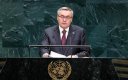
Erzhan Kazykhan, Permanent Representative of Kazakhstan to the United Nations Office and other international organizations in Geneva, noted that substantive engagement with United Nations treaty bodies is an important component of Kazakhstan’s sustained efforts to improve its national human rights protection system.
Kazakhstan will continue its efforts to expand women’s participation in decision-making, reduce economic inequality, prevent all forms of violence and create conditions that ensure rights enshrined in law are effectively realized in practice.